
The Church of God 7th Day observes and practices the divine scriptures as contained in the Holy book. This article will give an account of how the Church Of God Seventh-day in Kenya was born.
The church in Kenya was established following the missionary work initiated by Andrew N. Dugger, through his sending of Elder Shoemaker in 1970. We received the true gospel of the Kingdom from Jerusalem as indicated in Isaiah 2:2,3.
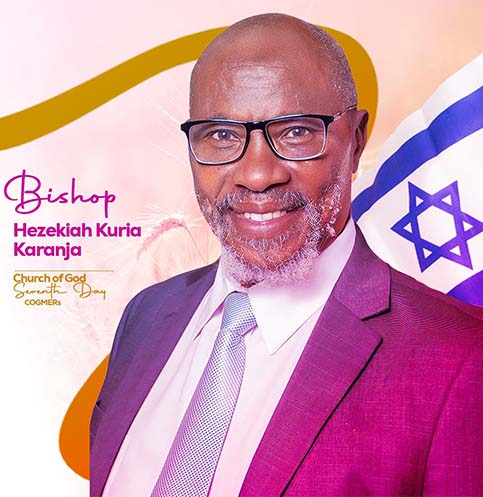
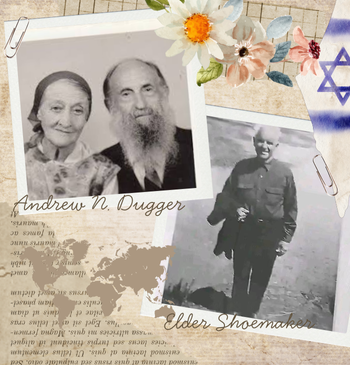
Elder Shoemaker sowed the seeds about the true gospel from Jerusalem, and by Elohim's faithfulness, the seeds germinated and grew impressively. Following his coming, about 300 followers came to know the light and were baptized. Being young and tender, the parent church in Jerusalem Israel nourished our newly born church, until she stood on her own feet. The parent church continued to send: Bible lessons, Tracts, Bible Calendars, Judah Magazines
The faith was and is still founded on the teaching of the Prophets, Apostles, and Yahshua Messiah being the cornerstone as recorded in Ephesians 2:19-20. In line with this, we hold the 10 commandments since we know that as noted in James 2:10-11 there is only one Lord who issued the Ten Commandments. We also believe that Yahshua did not come to change the law and the prophets but rather,He came to fulfill them. Therefore, all believers must keep the 10 Commandments as it is the only way to the glorious city, the New Jerusalem, which will come down from heaven according to Rev. 22:14.
We learned how to keep feasts of the Lord as instructed in the Bible including everything else that concerned church administration. The 7 (seven) feasts as recorded in Leviticus 23:1 are scripturally directed by God and were meant for all mankind. God has provided them as a way and a good plan for mankind's salvation. These feasts are relevant and still hold in the New Covenant as apostles did under the New Covenant as explained in 1 Cor.16:8, and Acts 20:5.
Through unity and clear knowledge of sound doctrines, it was easier to take the message to almost all corners of Kenya. We continue to preach through Bible tracts, and organize open-air meetings. Some of the believers made self-sacrifices by trekking long distances and facing many other challenges, with the only motivation being the urge to proclaim the message of the coming Kingdom of our Messiah to those who are perishing.
When Yahshua was leaving His disciples, He promised not to leave them as orphans but rather send them a helper as recorded in Joel 2: 28 and Acts 2:17-18. Following this promise and gift to the church, there is a manifestation of these gifts through visions, dreams, and speaking in tongues. Elohim has all along manifested himself in our midst as we continue to witness great miracles happening in our favor. Through these efforts, many church branches were opened in various districts, towns, and villages. The church has continued to grow in size and has established branches across the republic and out of the borders.
We are built on the foundation of the Apostles and the Prophets, Yahshua the son of God being the chief cornerstone as recorded in Ephesians 2: 19-20.
We believe that all scripture is inspired by Elohim including the Old and New Testament as recorded in 2Tim. 3:16 and therefore, we hold that all the 10 commandments of God are necessary for the faithful to secure eternal life and for them to enter the New Jerusalem as shown in Rev 14:12, Rev 22:14, and Rev 12:17.
We keep all the 7 (seven) feasts because they are scripturally directed by Elohim and were meant for all mankind as recorded in Leviticus 23:1-4. These feasts are relevant and still hold in the New Covenant as apostles did under the new covenant as explained in 1 Cor.16:8, and Acts 20:5.
We believe that Jerusalem is the source of truth and should teach Gentiles the true light from Elohim's word, as clearly shown in Isaiah 2:2,3 and Isaiah 60: 1,2. Therefore, Jerusalem is the world headquarters of the church and all people should look upon her for guidance as stated in Isaiah 62:1, 2, 1Thess. 2:14, and Zach.8:22, 23.
According to the book of Acts 2:17-18, the Promise of Elohim to the remnant church is that she should enjoy the manifestation of the Holy Spirit through dreams, visions, as well as talking in tongues. We believe in the 40-Point Doctrine.
Feast observance is one of the core beliefs of the true faith practiced by those that truly believe in Elohim, who obey his holy scriptures to the latter. On the contrary, most of those that are instinctively regarded as true believers when measured by recognized yardsticks, disregard the observance of holy feasts by questioning its authenticity. It is time to go back to the crossroad, evaluate where the good way is and walk in it! Now is the time to quest for truth, walk in truth and tell the scriptural truth which will set us free from our sins. As it is written “And you shall know the truth and the truth shall make you free” (John 8:31). What truth is being addressed here? John says that, “Sanctify them through thy truth: thy word is truth” (John 17:17).Therefore, truth can only be obtained from Elohim’s word -the scriptures. So let’s then authenticate the observance of the holy feasts from the scriptures!
In the beginning, Elohim spoke to Moses saying, “Concerning the feasts of the Lord, which ye shall proclaim to be holy convocations, even these are my feasts” (Leviticus 23:2). From that scripture, we find Elohim owning these feasts by saying “even these are my feasts”. This disapproves the perception that Moses was the author of the holy feasts, as indicated by most Christians. Moses only conveyed the messages given to him by Elohim to the Israelites. Yahshua clarified this out by saying, “Do not think that I will accuse you to the Father: there is one that accuseth you, even Moses, in whom you trust. For had ye believed Moses, you would have believed me: for he wrote of me. But if ye believe not his writings, how shall you believe my words?” (John 5:45-47). Therefore, it is expedient to keep these feasts in partial obedience of Elohim’s word. These feasts should be proclaimed and kept at their appointed times as indicated in verse 4 of the same scripture; “These are the feasts of the Lord, even holy convocations, which ye shall proclaim in their seasons.”
There are seven feasts to be observed as indicated in the whole chapter of Leviticus 23, which also clarifies the specific appointed time for each. Beginning in the spring, the seven biblical feasts are Passover, the Feast of the Unleavened Bread, the Feast of First-fruits; the Feast of Weeks (also known Pentecost or Shavuot in Hebrew), the Feast of Trumpets, the Day of Atonement, and the Feast of Tabernacles. In addition to these feasts, we have the weekly Sabbath as outlined in Leviticus 23. These feasts are closely related to Israel’s spring and fall harvests and agricultural seasons. They were meant to and still are to remind the Israelites each year of God’s protection and provision. But even more importantly, they foreshadowed the redemptive work of Yahshua our Messiah. Not only did they play significant role in Messiah’s earthly ministry but they also symbolize the complete redemptive story of Messiah, beginning with his death as the Passover Lamb of Elohim and ending with His second coming after which He will ‘tabernacle’ or dwell with His people forever.
Elohim emphasizes that these feasts are everlasting ordinances and should be kept throughout in all generations (Leviticus 23:14, 21, 31, 41; Exodus12:14, 13:10).
Feasts should not be kept or celebrated at home or within our residential places. They should be kept at the places chosen by Elohim to bear his name (Deuteronomy 16:5-6). Believers always convene at the appointed places forming holy assemblies from the first day of the feast to the last day. Yahshua did set us a good example to follow as indicated in John 2:13; “and the Jews’ Passover was at hand, and Yahshua went up to Jerusalem.” Jerusalem was where the temple was situated, therefore, Yahshua had to obey the scriptures and leave his abode. A second illustration of the same is in John 11:55; “...when the Jews’ Passover was nigh at hand, many went out of the country to Jerusalem before the Passover, to purify themselves. Again, here we see many people leaving their homes for Jerusalem to keep the feast of Passover. This has been Elohim’s pattern of setting apart his people from the beginning. He consecrated Goshen where his people dwelt such that, no plagues were experienced there. It is during these festive seasons that Elohim puts a division between his people and the people of the world as indicated in Exodus 8:23.
Most people think that these feasts were done away with by the coming of Yahshua the Messiah. This is NOT true. We find Yahshua in the New Testament keeping these feasts at their appointed time and place. For instance, when the Passover time was due, in the first day of the feast of unleavened bread, his disciples came to him asking, “where wilt thou that we prepare for thee to eat the Passover?”(Matthew 26:17). In verse 22 of the same chapter, we read that Yahshua celebrated that Passover with his disciples. Yahshua also kept the feast of tabernacle as indicated in John 7:10; “…But when his brethren were gone up, then went he also up unto the feast…..” He was in the feast throughout until the last day as indicated in verses 16 and 37 of the same chapter.
In John 11:55, another instance is cited when the Passover feast was celebrated; “when the Jews’ Passover was nigh at hand: many went out of the country to Jerusalem before the Passover, to purify themselves. After his crucifixion, his disciples proceeded with feast observances. For instance, when Paul was returning to Antioch, he passed by Ephesus and reasoned with the Jews in the synagogue. When they desired him to tarry longer with them, he did not consent but bade them farewell saying, “I must by all means keep this feast that cometh in Jerusalem” (Acts 18: 21). In acts 20:22, we read that the feast that Paul was so determined to attend was the feast of Pentecost. In his letter to Colossians Paul wrote, “Let no man therefore judge you in meat, or drink, or in respect of an holy day, or the new moon or of the Sabbath days: which are a shadow of things to come; but the body is of Messiah.”(Colossians 2:16-17).
From the text, we learn that the saints and faithful brethren in Yahshua which were at Colos-se were feasts and Sabbath keepers. Here, we see Paul encouraging them and cautioning them not to allow anyone to judge them on that! For these are a shadow of things to come but the body (casting the shadow) is Yahshua. Please note this clearly that, the time when this was written was after Yahshua’s crucifixion. Again, note the word- are, used in this text is a present simple tense. This is to mean, the observance of these feasts and Sabbath continues up to date. We also learn that these feasts, Sabbaths and new moon are a shadow of Yahshua. If you follow an object’s shadow for a time and you get to the object casting the shadow, you will no longer require the shadow since you now have the real object. This illustration is meant to help us comprehend the above verse. Therefore, the observance of feasts, Sabbaths and new moon which are a shadow of Yahshua, should proceed until we get to Yahshua (the body casting the shadow) i.e. at his second coming. For the righteous, the observance of Sabbaths and other feast will cease immediately after the second revelation of Yahshua but for the sinners (those that do not keep the feasts now), feasts and Sabbath observance will be forcefully introduced to them during the millennium reign of Yahshua as indicated in Zechariah 14:16-17 and Isaiah 66:23.
All these feasts are a road map for believers on their way towards the promised total rest. They illustrate Elohim’s perfect plan for redemption. During these feast, the Holy Spirit equips the believers fully and prepares them for eventual perfection and glorification at the second coming of Yahshua. Now that you know the truth, repent and turn away thy foot from not keeping the holy feasts of Elohim by pursuing righteousness and walking in way of truth!
Sabbath has been kept since creation of the world. We have realized in this article that when Yahshua came, more than 2000 years ago, he kept the Sabbath day. His apostles also kept the Sabbath, many years after the death and resurrection of Yahshua as written in Acts 17:2 “And Paul went in as was his custom, and on three Sabbath days, he reasoned with them from the scriptures.” Compare also Acts 13:42-44.
.it is widely accepted that our savior resurrected after the Sabbath was over, as the first day of the week (Sunday) was dawning. In Mark 16:1, it is recorded that Mary Magdalene and the other women went to the tomb after the Sabbath was over. This is a clear proof that the Sabbath day must have been on a Saturday
When should Passover be kept?
The Passover feast is kept in the fourteenth day of the first month of the ‘Hebrew Calendar’ at even (Leviticus 23:4). This first month of Hebrew calendar is known as Abib or Nisan according to Deuteronomy 16:1-2; “ Observe the month of Abib, and keep the Passover unto the Lord thy God: for in the month of Abib the Lord God brought thee forth out of Egypt by night.”A prescription for Abib to be the first month of the year was initiated by Elohim as indicated in Exodus 12:1-2; “This month shall be unto you the beginning of months: it shall be the first month of the year to you.” At this time, Israelites were captives in Egypt and Elohim had plans to free them as a nation from this captivity by his mighty hand. He gave them instructions on how to eat their first Passover which was his plan for their redemption from bondage. They were to sacrifice a one year male lamb with no blemish, in the evening of the fourteenth day of Abib. The blood of the lamb was to be applied on the upper and the two side posts of their doors.
During this night, the angel of death went through the land of Egypt and Goshen killing all the firstborns of people and cattle. All the households that had the blood of the lamb on their doors were passed over therefore, protected from death. Israelites’ salvation from death was through the blood of the lamb. This salvation was of great significance and they were to observe this as an ordinance forever. Therefore, Passover marked the deliverance of Israelites from captivity and this explains why Elohim cautions them to keep it as an everlasting ordinance.
Two feasts in oneAfter the Passover, on fifteenth Abib is the beginning of the feast of the unleavened bread. Israelites were instructed to keep this feast for seven days as indicated in Leviticus23:6; “And on the fifteenth day of the same month is the feast of unleavened bread unto the Lord: seven days ye must eat unleavened bread.” The first day of the Feast of unleavened bread (Abib 15) and the last day of the same feast (Abib 21) are ‘high day Sabbaths’ with holy convocations in which, no customary work is permitted apart from cooking preparations. This is clearly indicated in Exodus 12:16 and Leviticus 23:7-8; “ And in the first day there shall be a holy convocation, and in the seventh day there be a holy convocation to you; no manner of work shall be done in them, save that which every man must eat, that only may be done.”In the Old Testament, sacrifices made by fire were offered unto the Lord for seven days. Abstaining from leaven throughout the feast is a prerequisite as indicated in Exodus 12:19. The Passover feast and the feast of unleavened bread are observed together since they occur in a sequence. Therefore, the unleavened bread is eaten from the fourteenth day of Abib at even until the twenty first day of the same month as indicated in Exodus 12:18. Please note that this was an everlasting ordinance (Leviticus 23:14) and this explains why it is being observed today.
The feast of Passover and the unleavened bread is one of the three main feasts mentioned in the bible. They are important, and should be kept with no omissions whatsoever because they are everlasting statutes/ ordinances and should be kept throughout in all generations as recorded in Leviticus 23:14, 21,31, 41.
SymbolismAs mentioned earlier, Passover feast showcased the redemption of Israelites as a nation from the bondage in Egypt and from the angel of death through the blood of the lamb. After this, they embarked on a journey to their promised land. This was an illustration of greater things to come in future! In the New Testament, Elohim’s plan to save mankind from the bondage of sin is manifested. Note that Egypt is contextually typified as sin.
Yahshua became our Passover lamb and in addition to keeping the Passover, he taught his disciples how it should be observed even after his death. During the last supper, he used an unleavened bread to symbolize his body. In Luke 22:19 we read “ And he took bread, and gave thanks, and brake it, and gave unto them, saying, This is my body which is given for you: this do in remembrance of me.” As a matter of fact, the sole reason why the feast is termed as that of the unleavened bread is because leaven (yeast) is to be avoided at all costs during this time. It is one of the most outstanding observances during Passover celebrations. All leavened products such as cakes; biscuits etc are not to be eaten throughout the feast. Most importantly, we are advised to avoid sin especially pride and hypocrisy which is symbolized by leaven. At one time, Yahshua was speaking to his disciples and he sharply charged them to keep off the leaven of the Pharisees (Mark8:15). The Pharisees were repeatedly told off by Messiah because of their hypocrisy. However, remember the body of Messiah given in sacrifice was free from sin, and that is why leaven which typifies sin is avoided during these celebrations. Apostle Paul taught that Passover should be kept in worthy manner in remembrance of our savior until his second coming (1 Corinthians 11:23-34). The period before Passover is time for personal introspection. The bible cautions us against taking part in the Passover without first analyzing ourselves and our ways because anyone who eats it in unworthy manner brings judgment upon himself. He becomes guilty of the blood and body of Yahshua (vs 29-30).
The word Shavuot means “weeks.” It marks the completion of the seven-week counting period between Passover and Shavuot. Shavuot, also called the Festival of Weeks and Pentecost is the second of the three major festivals i.e. the Passover and Sukkoth. “Three times in the year you shall keep a feast to me. You shall keep the feast of the Unleavened Bread….you shall keep the feast of Harvest of the first fruits of your labor, of what you sow in the field. You shall keep the feast of Ingathering at the end of the year…Three times in the year shall all your males appear before the Lord God…” Exodus 23: 14-17. Seven weeks are counted from 16th Nisan, the day after the High Sabbath when the first sheaf of the harvest was taken to the high priest. It falls on Sivan 6, and ordinary work is not permitted on this day. Shavuot is a one-day holiday, beginning at sundown of the 5th of Sivan and lasting until nightfall of the 6th of Sivan
Exodus 34:11-22 records very well how Elohim commanded the Israelites against following the ways of life of the gentiles that surrounded them. These gentiles were idolaters and that is why Elohim did not want the children of Israel to follow after them. The children of Israel were supposed to be separate from the heathen and obey their only one and true God. Note that within the same context, we find Elohim telling His people, the children of Israel to keep His feasts, the feast of Unleavened Bread, the feast of Weeks and the feast of Tabernacles (vs. 18-23). Similarly, when Yahshua was leaving his disciples, he commanded them not to leave Jerusalem until they had received the promise of the Holy Spirit as recorded in the book of Acts 1:4 “And while staying with them, he ordered them not to depart from Jerusalem, but to wait for the promise…” The promise did not come on any other day but on Shavuot, and this implies that we are supposed to always obey everything that Elohim instructs us to do, because it attracts blessings.
n 1 Cor. 15:20 we read: “But now Messiah has been raised from the dead, the firstfruits of those who have fallen asleep.” When Yahshua died and rose from the dead, the harvest started! He was the first of many to follow, who would resurrect from the dead to inherit his kingdom!
The ancient monarch, David king of Israel - a man after God's own heart- prayed: "Teach us to number our days ARIGHT, that we may gain a heart of wisdom" (Psalm 90:12, NIV, emphasized). David understood that true wisdom - in as far as God is concerned - was when God's children walked in sync with Him. To this end, God, the Originator of TIME and the Appointer of days, months, seasons and years (please refer to Genesis 1:5,8, 13, 14-15) has ordained special days, sanctified and set them apart to be occasions for meeting with his worshippers.
The Bible actually recognizes these days as "SIGNS" between God and his true worshippers on earth: "Also, I gave them my Sabbaths as a sign between us so they would know that I the LORD, made them holy" (Ezekiel 20:12, NIV). See? God sanctifies us as we present ourselves before Him during these festivals. Please also note the usage of the plural form - Sabbaths - since it is not merely the weekly Sabbath that is being referred to here but rather the statement includes the other holy convocations set down in Leviticus 23. In verses 19 to 20 of the same chapter, we are further informed that it is only in keeping these festivals that one may be completely sure that he is worshipping the One true God, the Creator of the universe. In short, those who in humility would be taught of God to number their days aright, those that would be sanctified of Him, and those that would be sure that they are worshipping their Creator - would be such as diligently observe and celebrate God's ordained festivals as set forth in the Holy Scriptures. Among these important festivals is the Feast of Trumpets which falls on the first day of the biblical seventh month, the month of Ethanim (1Kings 8:2).
Significance of feast of TrumpetsSo what is the significance of this festival? Indeed why should a modern day believer bother with this ancient "Old Testament" feast? To begin with, all that happened in the Old Testament was written for our learning (Romans 15:4). These events were set forth as ensamples unto us who now live at the tail end of the ages (kindly refer to 1Corinthians 10:1-4, 11). Since today's believer is "...built on the foundation of the prophets and the apostles..." (Ephesians 2:19-20), it is incumbent upon us to also keep the festivals just as the ancients did. In other words, these holy festivals have a historical commemorative significance.
Secondly, these festivals also have a future prophetic significance or role. That is why the apostle Paul exhorted the early Grecian believers in the city of Colosse: "Let no man judge you in meat, or in drink, or in respect of an holy day, or of the new moon, or of the Sabbath days: which are a shadow of things to come..." (Colossians 2:16-17). Yahshua's words too, at the Last Supper in Luke 22:16 as he celebrated the Passover, indicate that festival will be celebrated in future. Further references to that effect include Isaiah 66:22-23 and Zechariah 14:16-18). Historically (and even today), the Feast of Trumpets marked the beginning of the period of solemn introspection, prayer and repentance leading up to the holiest of all Biblical holy days - the Day of Atonement (Hebrew - Yom Kippur) - on the tenth of Ethanim. This period is also called the "Days of Awe". The trumpet was therefore blown on this day to sound a warning that God's people should prepare to come before Him. "Sound the ram's horn (Hebrew: shofar) at the New Moon and when the moon is full, on the day of our feast..."(Psalm 81:3, NIV). The trumpet was also used to perform several other "summoning" functions: when Israel was at camp in the desert - the blast from one silver trumpet meant Israel's leaders were to meet, while the sounding of two silver trumpets indicated that the entire assembly was being summoned to a gathering ( Numbers 10:3 - 4). Elohim also used a loud trumpet blast to herald His meeting with Israel when He descended on Mt Sinai (Exodus 19:16, Hebrews 12:18- 19).
The trumpet was also used to call upon God to come to Israel's assistance when they went to war against their enemies. We see, for example, the walls of Jericho collapsing before Israel after trumpets are blown around the unfortunate city for seven days (Joshua 6). Similarly, Gedion, with a paltry three hundred men against numberless Midian hosts registers a resounding victory when he and his soldiers blow trumpets to invoke God's assistance (Judges 7:15 -22). We can therefore see here that sounding trumpets signified God's intervention in human affairs. In the New Testament, we learn that the sounding of the seventh (and last) trumpet indicates that; “the kingdoms of the world have become the kingdom of our Lord and of His Messiah..." (Revelation 11:15).
Yahshua's imminent Second Coming is also marked with a loud trumpet blast: “For the Lord himself will come down from heaven, with a loud command, with the voice of the archangel and with the trumpet call of God..." (1Thessalonians4:16, NIV). The scriptures show that this trumpet blast will awake long dead believers and enable them participate in welcoming the coming King of Kings (compare with 1Corinthians 15:52). The question therefore, is: how can one hear this epochal trumpet if in all his/ her life, they had never bothered to observe the Feast of Trumpets in its current albeit "shadowy" form?
The book of Revelation (chapters 8 - 11) also shows that trumpets are indicative of judgment. We see that each trumpet blast is attended by specific judgments and severe punishment on a sinful, wicked and unrepentant world. The last trumpet then ushers in the millennium: a period of restitution, cleansing and generally establishing the divine order of things, just as God had intended things to be from the beginning. Even nature itself awaits in eager anticipation for this period of joy and unparalleled peace on this tired, war- weary and decaying earth (kindly refer to Isaiah 11:1 -11, Acts 3:19, Revelation 11:15 and 21:1-4 etc).
For these reasons and others we see that we, as believers have every reason to joyfully rejoice and be glad as we faithfully celebrate the Feast of Trumpets. For, all scripture is God- breathed, and is useful for teaching, rebuking, correcting and training in righteousness, so that the man of God may be thoroughly equipped for ever good work" ( 2Timothy 3:16-17, NIV).
Yom Kippur also called the Day of Atonement is the most sacred of all the festivals of Elohim. It falls on 10th of the Hebrew month of Ethanim (late September or October in the Gregorian calendar) and marks a special day of introspection and self-evaluation when, we confess our sins before God. The festival was enacted by God after He forgave the Jewish people for the idolatry sin of the Golden Calf. Moses had just descended from Mount Sinai and found the children of Israel worshipping the golden calf. The wrath of God burnt upon them and it was only after Moses’ intervention that God pardoned the children of Israel (Exodus 32:1). It was because the Israelites atoned for their sin of idolatry, that God forgave them and offered Moses a second set of tablets.
Yom Kippur marks the conclusion of the ten Days of Awe, (a period of introspection and repentance from Rosh Hashanah -the Jewish New Year, which falls on 1st Ethanim). In addition to seeking for forgiveness on the Day of Atonement, we also pray that our names will be sealed in the book of life (Exodus 32:33).
Someone might ask, why should we keep Yom Kippur?The answer is simple and straight forward; because Elohim has said so. Yom Kippur is one of the appointed feasts of Elohim that are recorded in Leviticus chapter 23. The feasts do not necessarily or explicitly belong to certain group of people. In Leviticus 23: 2, it is written, “Speak to the children of Israel and say unto them, concerning the feast of the LORD, which you shall proclaim to be holy convocations, even these are my feasts.” The feasts belong to Elohim meaning that as the lawgiver, He is also present during these festivals.
When Elohim instituted the Day of Atonement, he intended it to continue even in the renewed covenant for he said in Leviticus 23:31 that it shall be a statute forever. It is important to understand that the day involved expiation of sins of the priesthood, of the tabernacle and consecration of the nation/ assembly of Israel (Leviticus 16:16-17). In the renewed covenant, the first two were accomplished through Yahshua’s sacrifice. From Romans 11:26-27, the third work for consecrating the assembly of Israel is yet to be done, waiting for the revelation of Yahshua in his second coming. The priesthood and the tabernacle are ready though a believer feels holy and needless of atonement on this day, perhaps out of pride, it would be necessary to meet for fasting and prayers for the nation (comprising of the spiritual Israel as well as those who are Jews by birth). As such, this perpetual feast is an expression of our hope and faith that he who started this noble work of sanctification and atonement shall bring it to fulfillment.
The feast of Tabernacles, also referred to as sukkot is a feast that all people are commanded to keep by Adonai. Sukkoth comes from the word sukkah, which means booths or a temporary shelter. Therefore, during this feast, believers live in temporary shelters such as tents to serve as a remembrance of the forty years that children of Israel were forced to live in booths while in the wilderness before getting to the Promised Land. It is a reminder of how temporal our lives are here on earth and how we await for our final redemption at the revelation of Yahshua in his second coming.
Sukkot is an 8 day holiday, starting from 15th to 22nd Ethanim (the biblical name for 7th month-1st kings 8:2), with the first and eighth day as high day Sabbaths as captured in Leviticus 23:39-43. No ordinary work is done on the high days of the feast.
God’s plan for bringing salvation to mankind is founded on the biblical feasts. Yahshua has already fulfilled the first four feasts (springtime feasts) expounded in Leviticus 23:1, i.e the Passover, the feast of unleavened bread, the feast of first fruits, and the feast of Shavuot. He fulfilled them with great precision and we can only expect the same to happen for the Fall-feasts, when He comes to gather in harvest and establish his kingdom on earth. Concerning the day of His second coming, Paul explains in Philippians 2: 10 that Yahshua will reign from Jerusalem and “Every knee shall bow and every tongue confess, in heaven and on earth and below the earth-that Yahshua the Messiah is Adonai, to the glory of God the Father.” At that time, when everything will be made new, Yahshua will tabernacle with his people.
All the time that the children of Israel were in the wilderness, Elohim protected them from all sorts of dangers found in the desert and provided for all their needs. He provided delicious food called manna from heaven; also water gushed out of the rock to quench their thirst (1 Corinthians 10:4) and healed them when they were sick. This symbolism is meant to help us remember that we cannot depend on our wealth but have to wait upon Elohim for our needs and survival. It is reminder that Elohim is our source of protection and provision.
The feast of Tabernacles is a time for joy, to celebrate in the place where Elohim will choose (Deuteronomy 16:15). As a matter of fact, sukkot is the most joyous feast among all the other biblical celebrations. It is a time to rejoice with the less fortunate amongst us such as the poor, the widows, the orphans among others (Deuteronomy 16:14).
The Israelites used to go up to Jerusalem and erect their sukkah where they would dwell during the entire feast (John 7:1, verses 10, 14, 37). Keeping sukkot also reminds us that we earnestly await the final rest where we will tabernacle with Yahshua in the millennial age. This is in accordance to what apostle Paul encourages us in Colossians 2:17 that keeping the appointed days of Elohim are a shadow of the things to come. There is a special blessing for everyone who keeps the feasts of Elohim and we therefore invite all to come and celebrate with us.
The History of the Church of God is an intriguing story that has many versions depending on the region and people you may ask. Rarely do you find this particular history in a written format, but is usually conveyed by word of mouth from mainly senior members of the messianic faith to the young people. For instance, the first missionary who came to Kenya, depending on where you ask, these are the variations of names you will be given;
Andy Shoemaker
Andi Schumacher
Andy Schumaker
Andy Schumacher
(For this write-up, we shall use Andy Shoemaker as was popularly accepted). This particular minister was sent to Kenya in 1970 by A. N. Dugger from Jerusalem, Israel. Andrew N. Dugger was one of the most outstanding ministers in the Church of God 7th Day during the 20th century. He devoted his life to preaching the third angel's message as recorded in the Book of Revelation 14:9.
Church Timelines Since Time of the Apostles
When we read the Book of Revelation chapter 2, we learn about letters that were addressed to seven churches spread across Asia. Even though the names of these churches refer to physical locations on the ancient Asian map, Yahshua was symbolically communicating to us through John on the island of Patmos. He gave a prophetic illustration of how the church will be from the apostolic age up to His second coming. Each of these 7 churches represents a timeframe in the historical chart of the true church that Yahshua established on the Rock (who is Elohim according to Deuteronomy 32:4), and even the gates of hell shall not prevail against it (Mathew 16:18). The first church was Ephesus and represented the period from 33AD to 100AD, which was during the early church of the apostles. Five other churches of Smyrna, Pergamos, Thyatira, Sardis, and Philadelphia as explained in Revelation chapters 2 and 3 represented five time intervals through which the church of God Seventh-day survived and thrived as well. More information on this can be found in the History of True Religion by A.N. Dugger. We are currently living in the last dispensation of the Laodicean church and it coincides with a period when the third angel’s message would be preached in the world as recorded in Revelation 14:9.
A.N Dugger relocates to Jerusalem
It was in the spirit of preaching the third angel’s message that this Jew by the name of A.N. Dugger relocated from the United States to Jerusalem Israel in 1953. Israel had just gained her independence in 1948. Therefore, AN Dugger having understood the end-time prophesies concerning the return of Jews to their homeland, he was convinced that it was prime time for him to evangelize. He established a printing press called the Mt Zion Reporter that helped him produce bible tracts, Judah magazines, and other bible literature such as the history of the true religion, Daniel, and Revelation among others. He would then share these materials with people in different countries notably in Asia, Africa, and the Caribbean islands among others.
True message from Jerusalem Reaches Kenya
Some of Dugger’s publications landed in Kenya in various places courtesy of missionaries who were working with prison services in the colonial era in Kenya. It's such a publication that the late Edward Macharia picked and gained interest in it.
When COGMERS media met Edward Macharia at his home on request, he made it clear that the paper was not collected on the ground as has been told in the past, but actually that he was at the prison workshop when he found the publication. He started the correspondence after finding their contacts at the back of the publication (flyers, pamphlets, etc).
It's important to mention here that there is always a disconnect on how similar publication found their way in various parts of the country. One reason for this is that all the publication material, at the tail end, was usually written, Don't let me die, pass me to another person. We think, people adhered to this last line and passed it on to another person who would be interested.
One such person who landed on these bible tracts and gained interest was Munene Kihara in 1967, at Eldoret town where he used to work. Munene Kihara used to fellowship together with Pastor H.K Karanja at an SDA church in Githiga, Murang’a. After reading it, Pastor Kuria Karanja and his fellow brethren contacted Jerusalem through the postal address provided on the tract so that they could gather more knowledge on this matter. What followed was a series of correspondences between Jerusalem and Kenya, which meant that more people were gaining interest in the new Jewish faith from Jerusalem. The group therefore requested A.N. Dugger to send a minister to come and baptize Kenyans who had already accepted the gospel from Jerusalem.
Before Shoemaker came to Kenya, A. N. Dugger used to receive letters of correspondence with other Kenyans to whom he sent magazines and other literature to teach on various doctrinal topics. The correspondence would take time since communication by then was done through the postal address.
According to an interview done with Bishop Kuria Karanja, he confirmed that Dugger had been having correspondence with other people spread across Kenya. For that reason, Dugger shared a list of all those contacts with them so that they could organize these people before a missionary was sent to the country. Bishop Kuria Karanja was by then a young man who served as a deacon at an SDA church in Githiga, Murang’a. He was working closely with Elder Kimani Kiano who was at that time serving as a church elder in the SDA church. They wrote letters to all these people through the postal addresses shared by Dugger. They informed them to get ready because a messianic Jewish missionary would be sent to baptize them and shed more light on the Jewish faith.
Elder Andy Shoemaker visits Kenya
Elder Andy Marion Shoemaker arrived in Kenya on 7th August 1970. He landed unannounced and therefore there was no one to receive him at the airport. He however did not get stranded because upon mentioning the name Kimani Kiano, he was handed over to Kimani’s brother Gikonyo Kiano who was a senior government official then. His transport from the airport to Nairobi CBD was facilitated and was shown where to board a Gatang’ara bus that would take him to his destination – Githiga in Murang’a county.
Upon arrival, the driver took her to Kimani Kiano’s shop at Githiga which was run by his wife. Next to it was Nyambura Kimani’s (popularly known as Wa-Ngenye) shop. It happened that the driver whose name was Maina arrived, it was Wa-Ngenye he found and handed over the visitor to him. I was so excited to have been the first Messianic to receive Shoemaker, she exclaimed.
Right behind Kimani Kiano's shop was a room where she directed him after short greetings since they would not chat much due to the language barrier. She had discerned that that must have been a Jew from Jerusalem. She immediately sent for Hezekiah Kuria Karanja, who was about 23 years old and would at least communicate in English. Wa-Ngenye recalls how she admired watching Hezekiah chatting with Shoemaker animatedly as if they had known each other for years. The bond they formed that day must have been the genesis of their solid bond throughout Elder Shoemakers' stay in Kenya. Later that evening, Kimani Kiano was informed about the guest when he left work; he was a health inspector at Githiga and the trio sent believers around to go and welcome the guest. Some of those who were present during that evening were: Mama Wahome, Jane Kamau, Mama Gathairu, and Kimani Gathaara, among about twenty others. This became a routine for every evening.
Elder Shoemaker was a man of average height and carriage who was in his early 60s because he was grizzled. He was a very jovial man and his gusto for evangelism was manifest and taught with undying charisma that glued his audience until conversion. Despite his staunch spiritual stance, his face always had a reassuring smile that concealed some wrinkles that had begun to emerge. He spent most of his time teaching the doctrine and praying for the sick and with the help of Deacon Hezekiah Kuria Karanja, who accompanied him wherever he toured as his interpreter, as well as other available believers, he was able to deliver his message effectively. He spent the night there and also planned his visits to other parts of Kenya.
He decided to first of all visit Ol Kalao, in a village called Nyakariangá where he baptized all those that had gathered there from neighbouring areas and ordained 16 men to shepherd the flock. After that, he visited an Akorino church in Kimende, Limuru, shared the gospel from Jerusalem and baptized new converts at River Bathi. There was one believer called Joel Kaburia who was also ordained in addition to the 16 men to look after the new believers at Limuru. He then moved to Githiga in Murang’a, and all along Pastor Kuria Karanja was playing the role of an interpreter for A.M Shoemaker. New believers in Githiga were baptized and two more men were ordained by Shoemaker, thereby making the total number of ordained ministers 19. Bishop Kuria Karanja was among the two who were ordained in Murangá and the other person was Elder Kimani Kiano. Through all these visits, Elder Shoemaker managed to baptize around 300 people and among them ordained a total of 19 members to shepherd the flock.
One of the most notable things that happened is that Bishop Karanja established a very strong connection with Shoemaker right from the time he came to Kenya. He was Shoemaker’s interpreter as he went on with his mission across different parts of Kenya. Additionally, he was a Deacon and a youth leader at his church back then and he had organized several youths such that they used to hold prayer meetings and fellowships with Shoemaker every evening for the time that he spent in Kenya. Shoemaker would share a lot with them about the word of God from Jerusalem.
Church after Shoemaker
After A.M. Shoemaker left Kenya for Israel, there was continued correspondence between the newly established church in Kenya and Jerusalem. The parent church in Jerusalem continued to send support literature in the form of bible lessons, tracks, bible calendars, and Judah Magazines to nourish the young and tender church in Kenya. The church learned how to observe biblical festivals and everything about church administration. Pastor Kuria Karanja and the late Pastor Muigai Ngángá joined hands and made a very formidable force in spreading the gospel across Kenya. They worked closely together and could travel for long distances, holding open-air meetings to share the word of God from Jerusalem. Through these efforts, many churches were opened in various districts, towns,o and villages in Kenya.
Dissensions
In the 1980s, the church went through hard times and dissensions arose among the members. Some splinter groups emerged during this period. Some of these groups are still in existence to date. Feast keeping as well as the manifestation of the Holy Spirit through dreams and visions were the main issues that caused disagreements. Also, there was little or no mentorship from Jerusalem especially after the death of A. N Dugger in 1975.
A new dawn
There was however a sigh of relief in 1991 because that is when COGMERs through the leadership of General Overseer Kuria Karanja miraculously acquired a church plot at Eastleigh Section 3. This would usher in a new period of peace and prosperity for the church especially now that there were no more wrangles. Eastleigh section 3 has always been the headquarters of the Church of God 7th Day (COGMERs) in Kenya, with branches all over the country.
One of the main reasons that led to the rampant expansion of church membership in the early 1990s was the establishment of a department called the National Evangelical Outreach. This is a well-organized body within the church and has representatives at the national, regional, and village levels. It has all along been organizing missions at the national, and regional levels as well as in local churches. During these missions, members hold open-air evangelism for several days and sometimes they camp for several months to share the third angel’s message. The church has also continued to employ innovative techniques through the able leadership of General Overseer, H.K Karanja. We have seen the establishment of the church media department that has played a big role in projecting COGMERs on the global map, especially through the church website and social media handles. Many people in Kenya and beyond have become part of our family by following our activities online, something that could not have been achieved previously due to geographical limitations. The results of these efforts have been remarkable as more people continue to know and accept Yahshua in their lives.
We are grateful to Adonai because what started as a small church with just a few people, has now grown to become a big organization in Kenya and beyond the borders. There are currently over 200 branches spread across the country with more than 300 leaders to shepherd them in the capacities of Pastors, Elders, and Deacons. We have branches in the neighboring Tanzania, Uganda, Malawi, and South Africa. We have also created friendships and affiliations in the USA. Pastor HK Karanja is the Bishop for COGMERs ministry in Kenya and is currently deputized by Pastor Kabuga Kimotho. A church elder is usually in charge of a branch and is assigned two or more deacons depending on several members in the branch.
At the moment COGMERs enjoys a large following owing to its original doctrine of A. N. Dugger and Andy Shoemaker lessons that they taught. Using written resources like the History of the True Religion, Sabbath Bible Lessons and constantly preaching the Third Angels message.
We forge on winning souls, rising and raising for Yahshua.
HalleluYah!
Compiled by:
COGMERs Editorial Desk